1

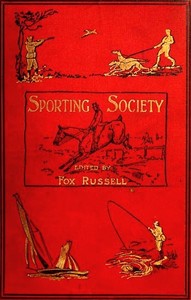
Sporting Society; or, Sporting Chat and Sporting Memories, Vol. 2 (of 2) — A Reader’s Guide
(0 User reviews)
1525
Project Gutenberg
2012
Not confirmed
Fishing -- Great Britain; Fox hunting -- Great Britain; Horse racing -- Great Britain; Hunting -- Great Britain
Readers of public-domain and historical texts
Project Gutenberg digital edition
en
Edition facts
Words
82,338
Reading time
358 min
Text sections
8
This digital edition of Sporting Society; or, Sporting Chat and Sporting Memories, Vol. 2 (of 2) — A Reader’s Guide is described by source-level measurements including 82,338 words, 5 hr 58 min estimated reading time, and 8 detected text sections.
The text analysis averages about 23.3 words per sentence, while the detected sections provide another way to judge how the source is divided.
Project Gutenberg metadata also associates the work with “Fishing -- Great Britain,” connecting these edition facts with the source record’s subject description.
Source:
Project Gutenberg record #40302
An 1880s anthology of hunting, fishing, and racing anecdotes edited by Fox Russell, with illustrations by Randolph Caldecott. The excerpts reveal a focus on detailed descriptions of salmon spearing and the camaraderie of Scottish sportsmen, rather than the broader catalog subjects.
Read the complete public-domain text at its original source.
Read on Project GutenbergThe second volume of Sporting Society presents a collection of hunting, fishing, and racing anecdotes, edited by Fox Russell and illustrated by Randolph Caldecott. The catalog subjects—fishing, fox hunting, horse racing, and hunting—suggest a broad survey, but the excerpts reveal a narrower focus. The surviving text centers on a detailed account of salmon spearing in Scotland, with precise descriptions of the landscape and the physical actions of the sportsmen. The narrative voice is conversational, with dialogue that captures the camaraderie and local dialect of the characters.
Salmon Spearing and the Scottish Landscape
The excerpts describe a night expedition to spear salmon at the mouth of the River Arkail. The prose is rich in sensory detail: the moonlit river “gleams like a sheet of pure silver,” and the hills appear “touched with hoar-frost.” The sportsmen prepare by tying fir-splinter torches and carrying dry clothing, anticipating a wet outing. The dialogue includes Scots dialect, as when Hugh Ross says a fish “will not have joost right justice at fifteen pounds’ weight.” This passage suggests that the volume’s fishing content is not merely instructional but narrative, emphasizing the setting and the characters’ interactions.
The Role of the Editor and Illustrator
Fox Russell is credited as editor, not author, implying that the volume compiles contributions from multiple hands. The excerpts do not reveal a single narrative voice; instead, the story of Alick, Frank, and Hugh Ross reads like a first-person or close-third account. Randolph Caldecott’s illustrations are mentioned in the metadata but do not appear in the text excerpts. The book’s front matter includes advertisements for other sporting titles by the same publisher, such as In Scarlet and Silk and New Sporting Stories, situating this volume within a commercial series aimed at sportsmen.
Catalog Subjects vs. Textual Evidence
The catalog lists fox hunting and horse racing as subjects, yet the excerpts contain no reference to either. The only sporting activity depicted is salmon fishing (spearing and catching with a knife). The term “hunting” in the catalog may refer to fishing or general field sports, but the text does not support a focus on fox hunting or racing. This discrepancy suggests that the catalog subjects are broad tags rather than precise descriptions of content. Readers seeking fox hunting or racing anecdotes may not find them in this volume, which instead emphasizes Scottish angling and the social dynamics of a fishing party.
The excerpts from Sporting Society, Vol. 2 offer a narrow but vivid window into late-Victorian sporting literature. Readers should approach the catalog subjects with caution, as the actual content appears to concentrate on salmon fishing in a Scottish setting. The narrative style blends action with landscape description, and the dialogue preserves regional speech. This volume is best understood as a period piece that reflects the tastes of its intended audience—gentlemen sportsmen—rather than a comprehensive guide to the sports listed in its metadata.
This anthology reminds me of my grandfather's ghillie tales, measured over whisky. That patient relish for detail—the bend of a spear, the quiet after a shot—surfaced again in Partial Portraits — Story, Setting & Ideas. Both books feel like sitting by a fire, watching someone turn a memory over, slowly, until it catches the light.
There are no reviews for this eBook.
There are no comments for this eBook.
Reader reflection
What was your reading experience?
Capture what you thought, learned, and would like to remember.
Your progress
0
/
10
2
Did this book hold your interest?
3
Would you encourage someone else to read it?
4
What was the reading difficulty like?
5
How closely did the book connect with your experience?
6
Did the story or argument move comfortably?
7
How useful were the ideas in this book?
8
Did this book create an emotional response?
9
Which lesson or insight stayed with you?
10