1

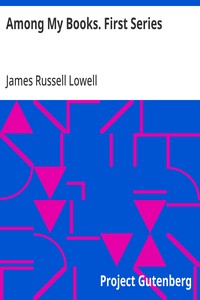
Among My Books. First Series — Text and Context
(0 User reviews)
1468
Project Gutenberg
2005
Not confirmed
New England -- Social life and customs; Rousseau, Jean-Jacques, 1712-1778; Shakespeare, William, 1564-1616 -- Criticism and interpretation; Witchcraft; Dryden, John, 1631-1700; Lessing, Gotthold Ephraim, 1729-1781
Readers of public-domain and historical texts
Project Gutenberg digital edition
en
Edition facts
Words
128,066
Reading time
557 min
Text sections
10
The source record for Among My Books. First Series — Text and Context measures this digital text at 128,066 words, 9 hr 17 min estimated reading time, and 10 detected text sections.
The text analysis averages about 27.4 words per sentence, while the detected sections provide another way to judge how the source is divided.
Project Gutenberg metadata also associates the work with “New England -- Social life and customs,” connecting these edition facts with the source record’s subject description.
Source:
Project Gutenberg record #8503
Lowell's essays on Dryden, Witchcraft, Shakespeare, New England, Lessing, and Rousseau blend literary criticism with cultural history, using personal anecdotes and sharp analogies to explore how writers and ideas shape their eras.
Read the complete public-domain text at its original source.
Read on Project GutenbergLowell begins his essay on Dryden with a story about Cellini's grandfather beating him to remember a salamander, then pivots to the old critical practice of using authors like Dryden and Pope as fixed standards—a tradition he finds stifling. This opening sets the tone for a collection that treats literary criticism as a living conversation rather than a set of rules. Throughout the volume, Lowell moves between close reading and broad cultural observation, often drawing on unexpected comparisons (a fine pear versus a fine peach) to challenge rigid aesthetics.
The Opening Gambit: Memory and Method
The Dryden essay’s opening anecdote—a boy beaten to remember a salamander—is not mere ornament. Lowell uses it to introduce his central concern: how critics enforce boundaries of taste. He notes that French villages once whipped children at parish boundaries to fix locations in memory, and suggests that critics have done the same with literary standards, using Dryden, Pope, and Goldsmith as “Hermae” to beat back newcomers. This historical parallel reveals Lowell’s method: he treats critical practices as cultural artifacts, subject to the same scrutiny as the works they judge. The reader should watch for similar moves in later essays, where Lowell often begins with a concrete image or historical curiosity before unfolding his argument.
Shakespeare and the Limits of Rules
In the Shakespeare essay, Lowell directly challenges dogmatic aesthetics. He cites the cloud-scene in Hamlet as a satire on “cast-iron definition” of beauty, arguing that judgment is intuitive and context-dependent. He rejects comparisons that cheapen one work by measuring it against another: “One does not flatter a fine pear by comparing it to a fine peach.” This insistence on intrinsic merit recurs throughout the collection. Lowell also distinguishes Greek from modern tragedy, borrowing Goethe’s contrast between “must” and “would”—destiny versus free will. But he warns that this formula has limits, especially with Spanish drama. Readers should note how Lowell balances generalization with caveat, a habit that keeps his criticism supple.
The Critic as Historical Reader
Lowell’s essays are as much about the critic’s own era as about their subjects. In the Dryden piece, he chides those who mistake “the common tincture of his age” for a personal blemish, urging critics to distinguish mud from moral stain. This historical sympathy appears again in the New England essay and the piece on Rousseau, where Lowell examines how ideas and social conditions shape writers. He does not treat authors as isolated geniuses but as figures embedded in their time. The reader will find that Lowell’s own voice—conversational, allusive, sometimes wry—enacts the very flexibility he advocates. His sentences often pivot from a specific observation to a broader principle, as when he moves from French tragedies being “very French” to the value of local flavor in art.
Structure and Surprise in the Essays
Lowell’s essays are not systematic treatises. They unfold by association, digression, and sudden insight. The Dryden essay, for example, begins with memory and punishment, then shifts to the history of critical standards, then to Wordsworth’s early personifications, and finally to a defense of historical context. This loose structure mirrors the “authentic charm of Montaigne’s want of it” that Lowell praises elsewhere. Yet the essays are not formless: each returns to a central tension between rule and freedom, tradition and innovation. The reader should expect to encounter unexpected juxtapositions—Cellini and Dryden, Shakespeare and Goethe, a pear and a peach—that illuminate Lowell’s argument through analogy rather than deduction. These leaps are the collection’s distinctive pleasure.
Voice and Audience
Lowell writes as a man speaking to equals, not lecturing from a podium. He uses “we” and “us” frequently, assuming a shared cultural literacy. His sentences are long and periodic, packed with allusions to classical and European literature, but his tone remains conversational. He can be sharp (“this conclusive style of judgment which consists simply in belonging to the other parish”) without becoming pedantic. The reader should be prepared for a demanding but rewarding style: Lowell expects you to follow his references and to enjoy the play of his mind. The essays reward rereading, as their arguments often emerge through accumulation rather than linear progression.
Lowell’s collection is best approached as a series of performances rather than a unified argument. Each essay has its own rhythm and focus, but all share a commitment to criticism as a humane art—one that values precision without dogma, history without determinism, and pleasure without apology. Read the essays in order, but feel free to pause and follow a digression; that is where Lowell often makes his most telling points.
Reading Lowell’s quiet linking of Dryden’s world to its tangled politics reminded me of sitting with an old edition of Howells, feeling the weight of a friendship caught inside its pages. There’s something tender about watching a critic hold a writer gently, not to judge, but to understand. My Mark Twain (from Literary Friends and Acquaintance) — Edition Insights gave me that same hush, that sense of a person trying to preserve a voice before it fades.
There are no reviews for this eBook.
There are no comments for this eBook.
Reader reflection
Take a moment to reflect on this book
Create a short personal record of your experience with this book.
Your progress
0
/
10
2
Was reading this book enjoyable?
3
Would you recommend this book to another reader?
4
What was the reading difficulty like?
5
How understandable was the text?
6
Is this a title worth rereading?
7
Did you gain anything practical from the text?
8
Which element worked best for you?
9
In one sentence, what did you learn?
10