1

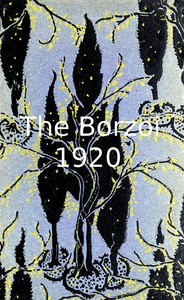
The Borzoi 1920 — Reading Notes
(0 User reviews)
1389
Project Gutenberg
2017
Not confirmed
Publishers' catalogs -- New York (State) -- New York; Alfred A. Knopf, Inc. -- Catalogs; Beerbohm, Max, Sir, 1872-1956; Cather, Willa, 1873-1947; Publishers and publishing -- United States -- 20th century -- Bibliography
Readers of public-domain and historical texts
Project Gutenberg digital edition
en
Edition facts
Words
38,207
Reading time
167 min
Text sections
12
The source record for The Borzoi 1920 — Reading Notes measures this digital text at 38,207 words, 2 hr 47 min estimated reading time, and 12 detected text sections.
The text analysis averages about 15.9 words per sentence, while the detected sections provide another way to judge how the source is divided.
Project Gutenberg metadata also associates the work with “Publishers' catalogs -- New York (State) -- New York,” connecting these edition facts with the source record’s subject description.
Source:
Project Gutenberg record #53979
A 1920 publisher's catalog that blends literary essays, author biographies, and excerpts from Borzoi Books, featuring contributions from Willa Cather, T.S. Eliot, and H.L. Mencken, with a foreword by Alfred A. Knopf.
Read the complete public-domain text at its original source.
Read on Project GutenbergAlfred A. Knopf’s The Borzoi 1920 is not a conventional publisher’s catalog but a hybrid volume that combines original essays, author biographies, and selected passages from Borzoi Books. In his foreword, Knopf notes his aim to create “a more permanent record of the early activities of the Borzoi” than a typical announcement, inspired by European publisher almanacs. The result is a document that reveals the literary tastes and marketing strategies of a prominent early 20th-century American publisher.
The volume’s structure—part anthology, part bibliography, part promotional tool—offers a window into the network of writers Knopf cultivated. Contributors include Willa Cather, T.S. Eliot, and H.L. Mencken, each providing pieces that range from critical essays to personal sketches. The catalog also includes a “Who’s Who” section with biographical details of authors, emphasizing their educational backgrounds and previous publications.
A Publisher’s Self-Portrait Through Contributors
Knopf’s choice of contributors reflects his desire to associate his firm with literary modernism and critical authority. The inclusion of T.S. Eliot, Ezra Pound, and H.L. Mencken signals an alignment with avant-garde and iconoclastic voices. Yet the volume also features more established figures like Willa Cather and Max Beerbohm, suggesting a deliberate balance between innovation and respectability. The essays are not mere puff pieces; many offer substantive literary criticism, such as Cather’s “On the Art of Fiction” and Mencken’s appraisal of Cather herself. This blend of promotion and critique gives the catalog an unusual intellectual heft.
Diction and Voice in the Original Papers
The original papers vary widely in tone and style. Conrad Aiken’s poem “How He Died” employs a hallucinatory, rhythmic diction: “The walls went round in a ringing haze” and “the lights like birds went swiftly round.” The poem’s repetition of time markers (“After a while the clock struck two”) creates a dreamlike progression. In contrast, H.M. Tomlinson’s “A Memory of Ypres” uses a more restrained, reportorial voice, focusing on sensory details of war. The juxtaposition of such disparate styles within a single volume underscores Knopf’s editorial range and his willingness to let authors speak in their own idioms.
The Bibliography as a Literary Artifact
The bibliography section lists Borzoi titles with publication dates, prices, and occasional annotations. It functions both as a record of Knopf’s output and as a subtle advertisement. The inclusion of excerpts—such as the passage from Aiken’s poem—serves to entice readers while demonstrating the quality of the press’s list. The bibliography is not exhaustive but selective, highlighting works Knopf deemed most representative. This curatorial approach transforms a dry list into a statement of aesthetic values, revealing which authors and genres the publisher wished to emphasize.
Biographical Portraits and Their Implications
The “Who’s Who” section provides concise biographies of authors, often noting education, travel, and previous publications. For instance, the entry for Arthur Waley mentions he “learnt Chinese and Japanese from native teachers in London,” emphasizing his self-taught expertise. These portraits serve multiple purposes: they humanize the authors, establish their credentials, and reinforce the publisher’s brand as a cultivator of intellectual talent. The uniformity of the entries—each following a similar template—creates a sense of coherence, while the details themselves hint at the diverse backgrounds of Knopf’s stable.
The Borzoi 1920 rewards readers interested in the intersection of publishing, literary criticism, and cultural history. Its hybrid format—part catalog, part anthology—offers a snapshot of a moment when American publishing was becoming more self-conscious about its role in shaping literary taste. Readers should approach it not as a complete work but as a curated selection that reveals as much about its editor as its contributors.
Over the years I have leafed through our 1920 Borzoi catalog so often that its essays feel like old friends murmuring about craft and patience. That same unhurried temper lives in Rustic Sounds, and Other Studies in Literature and Natural History — Background and Themes, where woods and words share one quiet breath. They sit together on my shelf, two voices that understand listening.
There are no reviews for this eBook.
There are no comments for this eBook.
Reader reflection
What was your reading experience?
Capture what you thought, learned, and would like to remember.
Your progress
0
/
10
2
How much did you enjoy the reading experience?
3
Would you pass this book on to a friend?
4
How much effort did this book require?
5
How did the reading compare with what you expected?
6
How did the pace of the book feel?
7
Do you expect to return to this book?
8
What did you appreciate most?
9
What did this book teach you most?
10