1

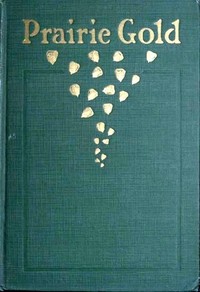
Prairie Gold — Inside the Classic
(0 User reviews)
2999
Project Gutenberg
2012
Not confirmed
World War, 1914-1918 -- Gift books; American literature -- Iowa; Iowa -- Literary collections; Short stories, American -- Iowa
Readers of public-domain and historical texts
Project Gutenberg digital edition
en
Edition facts
Words
72,864
Reading time
317 min
Text sections
10
The catalog record for Prairie Gold — Inside the Classic provides practical reading context through 72,864 words, 5 hr 17 min estimated reading time, and 10 detected text sections.
The text analysis averages about 17.7 words per sentence, while the detected sections provide another way to judge how the source is divided.
Project Gutenberg metadata also associates the work with “World War, 1914-1918 -- Gift books,” connecting these edition facts with the source record’s subject description.
Source:
Project Gutenberg record #39957
This 1917 anthology from the Iowa Press and Authors' Club, sold to benefit the American Red Cross during World War I, collects short stories, poems, and a play by Iowa writers. The excerpts show a mix of rustic humor, patriotic sentiment, and an unexpected verse drama set in a mythical Eastern court, revealing the range of voices gathered under a single state banner.
Read the complete public-domain text at its original source.
Read on Project GutenbergThe volume opens with a preface that frames the book as a charitable effort: “the first bit of co-operative work done by Iowa writers,” with proceeds going to the American Red Cross. The table of contents lists over forty pieces, including contributions from Hamlin Garland, Emerson Hough, and Ellis Parker Butler. Yet the excerpts reveal a striking diversity in genre and tone. Alongside rural sketches and patriotic poems sits a full-length verse drama, Nourmahal, set in an imagined Eastern kingdom. The play’s dialogue, with its elaborate courtly address (“O Lord of the Lives of Your Servants”), contrasts sharply with the plainspoken humor of other selections. This juxtaposition suggests the anthology’s editors aimed to showcase not just regional pride but also stylistic range.
Voices of the Prairie and the Palace
The excerpts offer two distinct registers. In the preface and index, the language is direct and civic: “the land of the singing corn,” “pride of state.” Titles like “A Load of Hay” and “The Happiest Man in I-O-Way” promise rustic anecdote. But the play Nourmahal shifts abruptly to ornate, ritualistic speech. Characters speak in measured, formal exchanges: “I shall watch over you as the cloud watches over the garden where the roses are waiting for the rain.” The heroine Nourmahal rejects kingship with a fierce independence: “To breathe the air where there are no queens would be an ecstasy.” This is not the voice of a cornfield anecdote. The anthology thus yokes together two literary worlds—the local-color realism of the Midwest and a stylized, almost symbolist drama—without commentary on the contrast.
Pace and Structure in the Dramatic Excerpt
The play excerpt is notable for its deliberate pacing. Stage directions are minimal but evocative: “a messenger enters … preceded by two attendants carrying each one of the long, melon-shaped lanterns.” The dialogue proceeds through elaborate repetitions and deferrals. King Nasrulla says, “I listen to the words of Huseyn,” then later, “I listen to the words of Nourmahal with the words of Huseyn.” This incremental repetition slows the action, creating a ceremonial rhythm. The messenger’s speeches are layered with honorifics (“O Mighty Lord of the Great Center of Earth”), and the king’s responses are short, almost reluctant. The effect is a stately, ritualistic exchange that contrasts with the brisk narrative pace likely found in the anthology’s shorter prose pieces. Without the full play, one can only note that this excerpt builds tension through formal constraint rather than rapid plot advancement.
Recurring Motifs: War, Service, and the Land
Though the excerpts are limited, several motifs recur. The preface dedicates the book to the American Red Cross and speaks of “the brave men who have given themselves as a human sacrifice to the establishment of a world-wide democracy.” The play, while set in an imaginary East, also concerns war and its human cost: Nourmahal criticizes kings who “teach all men to be soldiers and all soldiers to be ruthless.” The anthology’s title, Prairie Gold, suggests the value of the land, but the contents repeatedly turn to themes of sacrifice and service. The index includes pieces like “Kitchener’s Mob” and “The Call of the Race,” hinting at a patriotic undercurrent. Yet the play’s anti-royalist, pacifist undertones complicate any simple reading of the collection as purely jingoistic. The excerpts show an anthology that uses the local to frame the global, but leaves the tensions between these perspectives unresolved.
Readers approaching Prairie Gold should expect a deliberately uneven collection, one that moves from dialect humor to verse drama without apology. The play Nourmahal stands out for its formal language and slow, ceremonial pacing—a sharp departure from the anthology’s likely center of gravity in short, anecdotal pieces. Pay attention to how the editors sequence the works; the juxtapositions may reveal more about the club’s ambitions than any single piece does. The book is best read as a document of its moment: a wartime charity project that tried to capture the full literary range of a single state.
There’s something touching about those Iowa writers setting aside their rustic yarns to raise money for the Red Cross, all that homely hope pressed into one cover. It makes me think of a later journey inked in letters west, a quieter kind of witnessing across vast, open country. Strange how distant voices reach us. The Two Great Canyons: Excerpts From Letters Written on a Western Journey — Text and Context holds that same wondering pause, I find.
There are no reviews for this eBook.
There are no comments for this eBook.
Reader reflection
Record your reading impressions
A brief reflection can help important ideas stay with you longer.
Your progress
0
/
10
2
How did the book work for you overall?
3
Would you pass this book on to a friend?
4
What was the reading difficulty like?
5
Would you read this book again?
6
Did the book give you something worth debating?
7
How did the reading compare with what you expected?
8
How strongly did the book affect you emotionally?
9
In one sentence, what did you learn?
10