
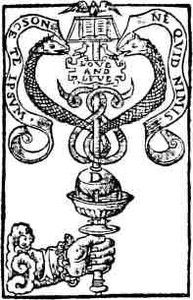
Hypnerotomachia: The Strife of Loue in a Dreame by Francesco Colonna
First published in 1499, Hypnerotomachia Poliphili (which roughly means 'Poliphilo's Strife of Love in a Dream') is one of the weirdest and most fascinating books to survive from the Renaissance. It's less of a novel and more of a guided tour through a sleeping mind.
The Story
The story is simple on the surface. A man named Poliphilo pines for his love, Polia. He falls into a troubled sleep and enters a vast, elaborate dream. This dreamworld is a mix of ancient ruins, fantastical gardens, and monumental buildings covered in cryptic inscriptions. As Poliphilo explores, he faces symbolic trials, meets nymphs and gods, and pieces together fragments of Polia's presence. The entire journey feels like solving a mystery where the clues are hidden in architecture, mythology, and his own desires. The dream itself becomes the main character—a shifting, symbolic landscape that Poliphilo must navigate to understand his own heart.
Why You Should Read It
You don't read this book for a fast-paced plot. You read it to get lost. The real magic is in the atmosphere. Colonna builds a world so detailed and strange that it pulls you in completely. It's like the Renaissance version of a surrealist painting. The writing mixes obsessive descriptions of fictional buildings with moments of genuine emotion and confusion. Reading it, you feel Poliphilo's wonder and frustration. You start to see his quest not just as a search for a woman, but as a search for meaning, beauty, and order in a world that feels like a beautiful chaos. It’s a book about obsession, both in love and in art.
Final Verdict
This book is not for everyone. If you need clear-cut stories with easy answers, look elsewhere. But if you're the kind of reader who loves art history, ancient myths, symbolic puzzles, or just something truly different, Hypnerotomachia is a treasure. It's perfect for dreamers, architecture geeks, and anyone who enjoys books that are more about the journey than the destination. Think of it as a literary artifact—a window into a mind from 500 years ago that dreamed in breathtaking, bewildering detail.
Donna Nguyen
9 months agoThe fonts used are very comfortable for long reading sessions.
Mason Walker
4 months agoSimply put, the content flows smoothly from one chapter to the next. A valuable addition to my collection.
Emily Martin
2 years agoIf you enjoy this genre, the clarity of the writing makes this accessible. This story will stay with me.
Michelle Smith
1 year agoI have to admit, the arguments are well-supported by credible references. Thanks for sharing this review.




Richard Harris
1 month agoHonestly, the content flows smoothly from one chapter to the next. I would gladly recommend this title.